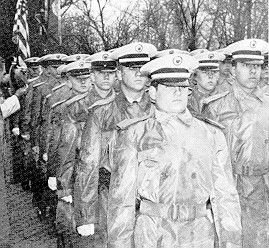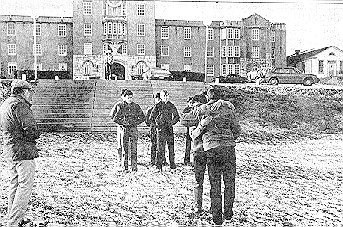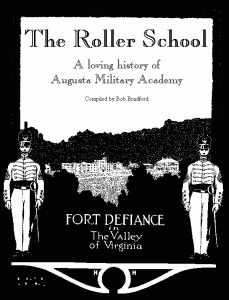
Augusta Military Academy's history extends across more than a century, from Charles Summerville Roller's return from the Civil War through generations of cadets, teachers and military leaders, to the final formation in 1984.
A Question of Beginnings
The academy marked its centennial in 1965, tracing itself to 1865 — the year Roller came home from the Civil War and began tutoring young veterans. The exact founding date has been debated by historians and members of the Roller family.
Faculty historian Emmett “Dusty” Rhoades favored 1874, while family records point to 1879, when Roller opened the Augusta Male Academy at his new home on the campus later generations would know.
The first years established the educational foundation from which Augusta Military Academy would eventually develop into a prominent military preparatory school.
The founding-date debate
Different historical records point to different beginnings. Tutoring is traced to 1865, while later records identify 1874 and 1879 as important milestones in the school's development.
The Professor's School
Roller served during the Civil War before returning home and beginning his career as an educator. His school gradually grew, attracting boarding students from outside the local community.
Military instruction eventually became an important part of school life. Uniforms, drills and organized activities helped establish the distinctive character of the institution.
The Sons Return
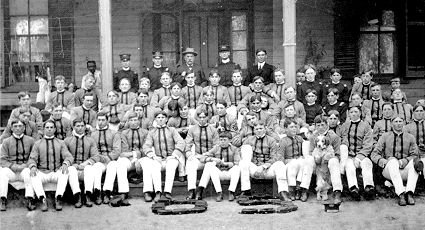
As Professor Roller grew older, his sons returned to Augusta to help manage the academy. Thomas was a classical scholar, while Charles S. Roller, Jr. had graduated from the Virginia Military Institute.
By the beginning of the twentieth century the academy had grown substantially. Uniforms became compulsory and the Roller family continued guiding the institution through another generation.
Colonel & Major
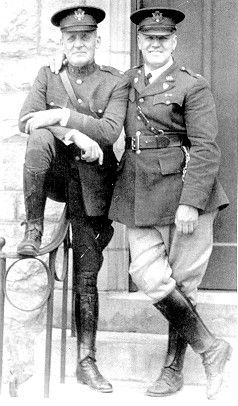
For decades the two Roller brothers operated Augusta together. Thomas, known as the Colonel, concentrated on academics and administration, while Charles, known as the Major, served as Commandant of Cadets.
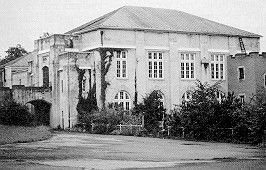
During their leadership the physical campus expanded considerably. New academic facilities, White Hall and the large barracks became important parts of academy life.
Wars & Hard Years
Augusta was deeply affected by the First World War, the Great Depression and later World War II. Many alumni served, while the academy adapted to changing economic and military circumstances.
The cadet-waiter system helped many students attend the academy, while the Roller family worked to keep the school operating during difficult financial years.
The Meuse River canteen
A treasured tradition involved water collected from the Meuse River when the First World War ended. The story remained part of the academy's traditions for years afterward.
The Big Boy's Augusta
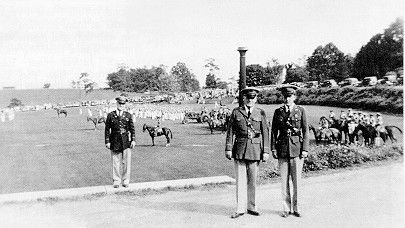
In the years following World War II, Charles Roller led Augusta through one of its most successful periods. Returning veterans, athletes and cadets filled the ranks, while the academy developed strong athletic and military programs.
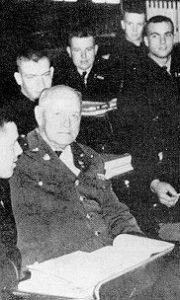
Roller remained closely involved in the daily life of the school, teaching, managing the academy and maintaining a direct connection with cadets.
The cracked bell
After General Roller's funeral, a cadet officer attempted to strike the familiar mess-hall bell. The bell cracked and was never used again.
The Long Twilight
Ownership eventually passed to Mrs. Roller and to Mal and Linda Livick, who guided Augusta through its final decades. The Corps reached its largest size during the mid-1960s.
Changing military policy, declining enrollment and broader social changes gradually altered the academy. The school became a nonprofit organization in 1977, but enrollment continued to fall.
During the 1983 Christmas break, the academy faced severe financial difficulties. In 1984, Augusta Military Academy closed, bringing the long history of the Roller school to an end.